

-
Vinoth
- Posted on
- Categories:General
- 0 comments
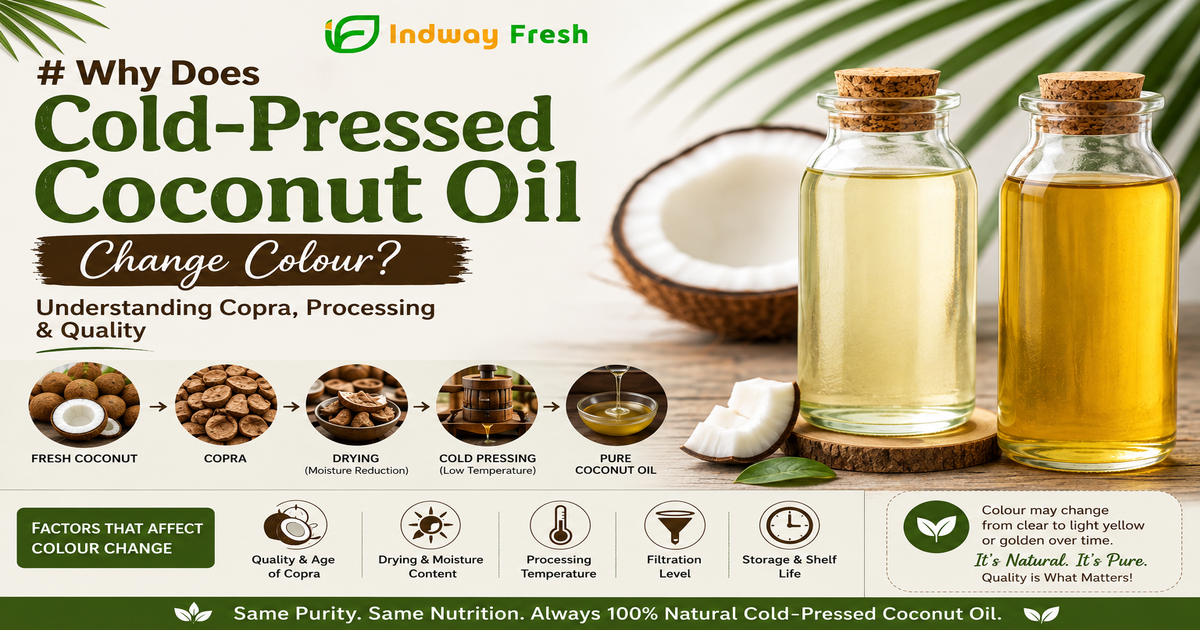
If you’ve ever opened a bottle of cold-pressed coconut oil and noticed it looks slightly yellow instead of crystal clear — or wondered why one batch solidifies bright white while another turns ivory — you’re not alone. Colour variation is one of the most common questions customers ask about cold-pressed coconut oil, and the answer reveals a lot about how the oil is made, where it comes from, and whether what’s in the bottle is genuinely good quality.
This guide breaks down the science and the process so you know exactly what you’re looking at.
What Colour Should Cold-Pressed Coconut Oil Actually Be?
There’s no single “correct” colour for cold-pressed coconut oil — and that’s important to understand upfront.
- Liquid state: Pale yellow to light golden, sometimes water-clear
- Solid state (below ~24°C): Bright white to off-white or ivory
Both are completely normal. The variation depends on the type of coconut used, the drying method, the freshness of the copra, the pressing temperature, and whether the oil has been filtered.
What should concern you is oil that is dark brown, murky, or has an acrid or burnt smell — those are signs of poor-quality copra, excessive heat, or contamination.
The Root Cause: It All Starts with Copra
Cold-pressed coconut oil is extracted from copra — the dried white kernel (meat) of the mature coconut. The quality and colour of the oil are almost entirely determined at this stage, before pressing even begins.
Fresh, Properly Dried Copra
When coconut kernels are sun-dried or kiln-dried carefully at controlled temperatures, the copra retains its natural cream colour. Oil extracted from this copra is typically pale yellow to nearly clear.
Overly Dried or Heat-Damaged Copra
When copra is exposed to too much heat during drying — or is stored for too long before pressing — oxidation and Maillard reactions begin. The coconut proteins and natural sugars start to brown. This produces a noticeably more yellow, amber, or golden-tinted oil.
Moisture-Damaged Copra
Copra that absorbs humidity during storage is at risk of mould and rancidity. This can push the oil towards murky, dark yellow, or brownish tones — and introduce off-flavours. This is the kind of colour change to avoid.
Cold-Pressed vs. Refined: Why Color Differs So Dramatically
| Factor | Cold-Pressed | Refined / Expeller |
|---|---|---|
| Bleaching step | None | Yes — removes natural colour |
| Deodorising | None | Yes — strips smell and colour pigments |
| Natural colour retained | Yes | No |
| Copra quality dependence | High | Low (defects hidden) |
Refined coconut oil looks perfectly white and odourless — not because it’s purer, but because it has been bleached and deodorised to mask variations in raw material quality. Cold-pressed oil has no such corrections applied, so what you see is exactly what the copra gave.
This is actually a mark of honesty, not a defect.
Why Does Colour Change Between Batches?
If you’ve ordered the same cold-pressed coconut oil multiple times and noticed slight differences in shade, here’s why:
1. Seasonal variation in coconuts
Coconuts harvested during summer months tend to have drier, denser kernels. Monsoon-season coconuts carry higher moisture. Both affect the natural pigment levels in the oil.
2. Copra sourcing region
Coconut varieties from coastal Tamil Nadu, Kerala, and Karnataka have subtle differences in fat composition and carotenoid content, which influence the colour of the pressed oil.
3. Time between pressing and bottling
Freshly pressed oil oxidises slowly on exposure to light and air. Oil that has been stored longer before bottling may appear slightly more golden than oil pressed and bottled the same week.
4. Filtration level
Some cold-pressed coconut oils are passed through a fine cloth or gravity filter to remove fine solids. Less filtration = slightly cloudier, more golden appearance. Both are safe to consume — the filtered version simply looks cleaner.
The Colour-Quality Matrix: What to Look For
| Colour | What It Usually Means |
|---|---|
| Clear to pale yellow (liquid) | Fresh, quality copra, properly pressed |
| Light golden yellow (liquid) | Good quality, possibly slightly older copra or warmer press |
| White to off-white (solid) | Normal solidification, excellent sign |
| Ivory or cream (solid) | Minor carotenoid presence, still good quality |
| Dark yellow or amber (liquid) | Overheated copra or oxidised stock — check smell |
| Brown or murky | Mould-damaged copra or contamination — avoid |
Does Colour Affect the Nutritional Value?
Slightly — but not in a way that should alarm you.
The primary nutrient in cold-pressed coconut oil is lauric acid (a medium-chain fatty acid), which is colourless. Colour is mainly influenced by carotenoids, tocopherols (vitamin E compounds), and polyphenols — all of which are beneficial antioxidants naturally present in the coconut kernel.
A slightly golden cold-pressed coconut oil may actually contain more retained antioxidants than a water-clear version, depending on how the copra was handled. The relationship between colour and nutrition is not linear — which is why you shouldn’t chase “the clearest oil” as a proxy for the best oil.
The most reliable quality indicators remain:
- A clean, fresh coconut aroma
- No bitterness or acrid taste
- FSSAI certification on the label
- Transparent sourcing information from the manufacturer
How Indway Fresh Approaches Copra Sourcing and Quality
At Indway Fresh, we source coconuts from trusted farmers across Tamil Nadu and process them in our Madurai facility using traditional cold-press (chekku) extraction — without heat, bleaching, or chemical refining.
Every batch is checked for copra quality before pressing. Our oil retains its natural colour, aroma, and nutritional profile because nothing is added or removed after extraction
Is Information, Not Decoration
Cold-pressed coconut oil changes colour because it’s real, unrefined, and honest about where it came from. The variation you see from batch to batch reflects the season, the copra source, and the time since pressing — all natural variables in a genuinely cold-pressed product.
What to remember:
- Pale yellow to golden = normal and often nutritionally rich
- White when solid = expected and healthy
- Dark, murky, or brown = a reason to investigate
- Perfectly white liquid with zero smell = likely refined, not truly cold-pressed
Frequently Asked Questions
Q: My cold-pressed coconut oil turned white. Has it gone bad?
No. Coconut oil solidifies naturally below about 24°C. The white solid state is completely normal — it will melt clear or pale yellow again when warmed.
Q: Is clear cold-pressed coconut oil better than yellow?
Not necessarily. Clarity depends on filtration level and copra freshness. A light golden colour can indicate a richer antioxidant profile from quality copra.
Q: Why does refined coconut oil always look the same?
Because it’s bleached and deodorised during processing. This removes colour variation along with some natural compounds. Cold-pressed oil skips those steps, so colour varies naturally.
Q: Can the colour of coconut oil indicate it’s rancid?
Dark brown or murky oil with an off smell may indicate rancidity or mould-damaged copra. Always do a smell check — rancid oil has a distinctly sour, musty, or burnt note that fresh cold-pressed oil does not.
Q: Does cold-pressed coconut oil expire?
Yes. Typically 12–18 months from pressing when stored in a cool, dark place. Always check the manufacturing and best-before date on the label.
