

-
Vinoth
- Posted on
- Categories:General
- 0 comments
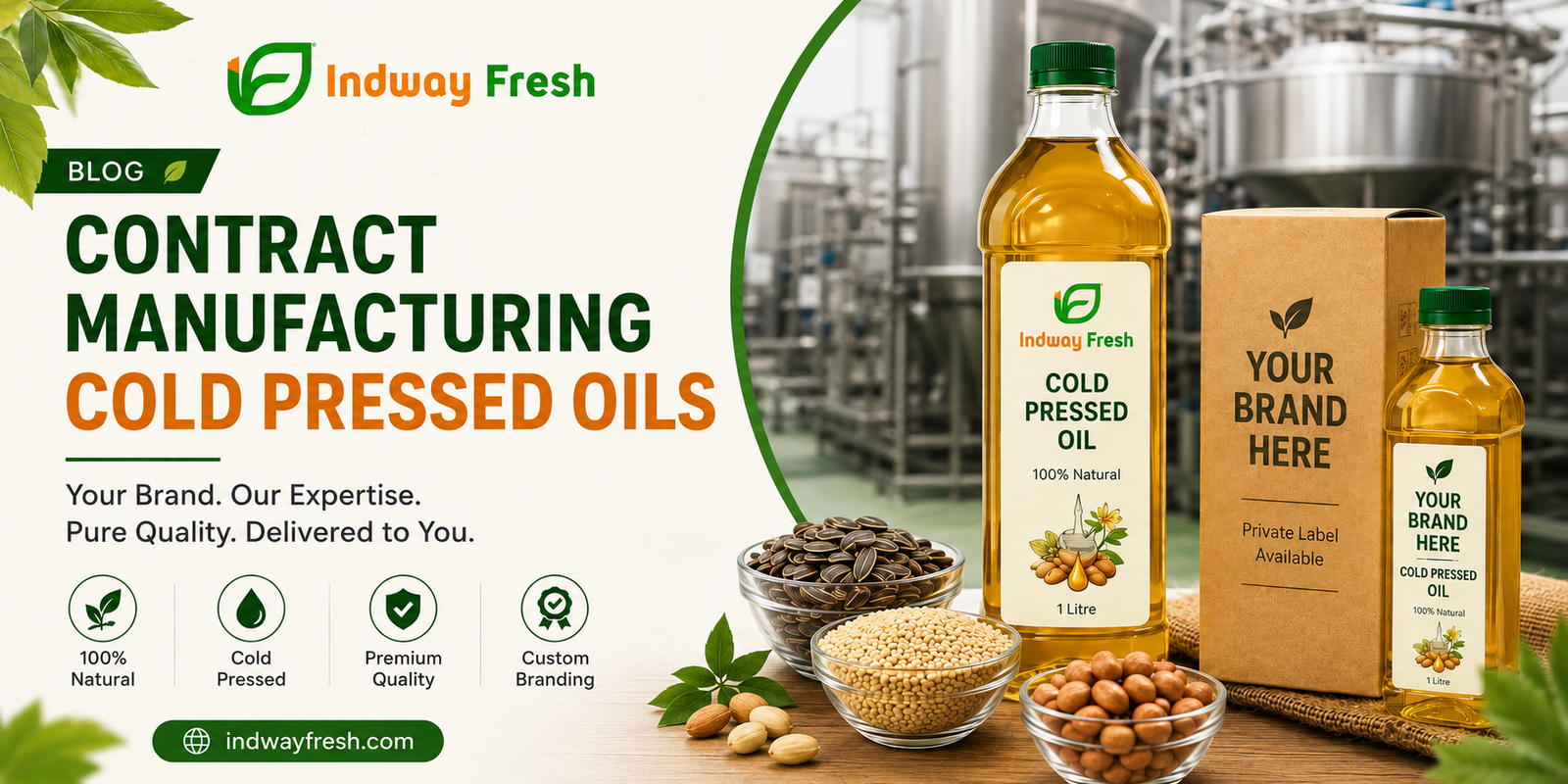
Cold pressed oils groundnut, sesame, coconut, mustard have moved from niche health stores to everyday kitchens and modern retail shelves. If you’re a food brand, D2C startup, or retailer who wants to sell cold pressed oil under your own label but doesn’t want to build a crushing unit from scratch, contract manufacturing is the fastest route to market. Here’s how the process actually works, and what it costs at each stage.
What Is Contract Manufacturing for Cold Pressed Oils?
Contract manufacturing (also called private label or white label manufacturing) means an existing oil mill presses, filters, and packs oil on your behalf, using your brand name, packaging, and specifications. You bring the brand and the market; the manufacturer brings the machinery, raw material sourcing, and production expertise.
This model lets a new brand launch with zero capital investment in plant and machinery no oil expeller, no filter press, no factory shed to build or lease.
How the Process Works
1. Sampling and Formulation
The manufacturer shares sample batches of the oil (or oils) you’re interested in groundnut, sesame, coconut, or a blend. You confirm taste, colour, aroma, and shelf-life expectations before committing to a production run.
2. Raw Material Sourcing
The manufacturer procures oilseeds, usually from regional mandis or contracted farmers. Seed quality (moisture content, oil content, freshness) directly affects yield and final oil quality, so reputable manufacturers test incoming seed lots before crushing.
3. Cold Pressing
Seeds are crushed in a wood or steel ghani (expeller) at low speed, keeping temperatures below roughly 40–50°C so the oil retains its natural nutrients, flavour, and aroma this is what distinguishes “cold pressed” from refined oil, which is extracted using heat and solvents.
4. Filtration and Settling
Freshly pressed oil contains sediment. It’s typically left to settle for a few days and then filtered (cloth or cartridge filtration) to achieve clarity, without any chemical refining.
5. Quality Testing
A serious manufacturer will test each batch for parameters like free fatty acid (FFA) content, peroxide value, and moisture and should be FSSAI licensed. Ask for lab test reports (Certificate of Analysis) with every batch.
6. Packing and Labelling
Oil is filled into your bottles, pouches, or tins and labelled with your brand, FSSAI number, batch code, and mandatory declarations (net quantity, MRP, manufacturing/expiry dates, “manufactured for” or “marketed by” line).
7. Dispatch
Packed stock is shipped to your warehouse, distributor, or directly to marketplaces, depending on your logistics arrangement with the manufacturer.
What It Costs
Costs vary by oil type, order volume, and packaging format, but here’s a realistic breakdown:
Raw oil (bulk, unbranded) cost Genuine cold pressed groundnut and sesame oil at wholesale typically runs in the range of roughly ₹250–₹300 per litre in India, depending on seed prices, grade, order volume, and region. Coconut and mustard oil pricing varies with seasonal seed costs. Prices move with oilseed market fluctuations, so ask your manufacturer how often and with how much notice they revise pricing.
Packaging cost Bottles, pouches, caps, induction seals, and labels typically add anywhere from ₹8–₹40+ per unit depending on material (PET vs glass vs tin) and print quality. Tamper-evident seals and premium labels cost more but matter for retail trust.
Processing/conversion charges Many manufacturers quote an all-in per-litre rate that bundles crushing, filtration, filling, and labour. Others charge a separate job-work fee on top of raw material cost ask for a clear breakup.
Minimum Order Quantity (MOQ) MOQs for private label cold pressed oil commonly start around 50–100 litres for a trial batch, scaling to 500–1,000+ litres for regular production runs. Smaller MOQs let new brands test the market before committing to bulk.
Certification and compliance costs Your own FSSAI license/registration is mandatory for brand owners even when manufacturing is outsourced (this is separate from the manufacturer’s FSSAI license). Budget for this along with any lab testing you commission independently.
Logistics Freight from the manufacturing unit to your warehouse or fulfillment center is usually billed separately, based on distance and order size.
Questions to Ask Before You Sign a Contract Manufacturing Deal
- Is the manufacturer FSSAI licensed, and can they share it along with batch-wise lab reports?
- What is the extraction temperature, and can they confirm it stays within cold-pressed limits?
- How is pricing structured — all-inclusive per litre, or raw material plus separate conversion charge?
- What is the MOQ, and can you start with a trial batch?
- Who owns the formulation/recipe if you customise a blend?
- What’s the lead time from order confirmation to dispatch?
- Do they support private labelling (your bottle, your label) or only bulk supply?
The Bottom Line
Contract manufacturing lets you launch a cold pressed oil brand without owning a mill but the trade-off is that your product quality is only as good as your manufacturing partner’s process discipline. Vet for FSSAI compliance, ask for lab documentation on every batch, and start with a small trial order before scaling up production. tamil meaning
