

-
Vinoth
- Posted on
- Categories:General
- 0 comments
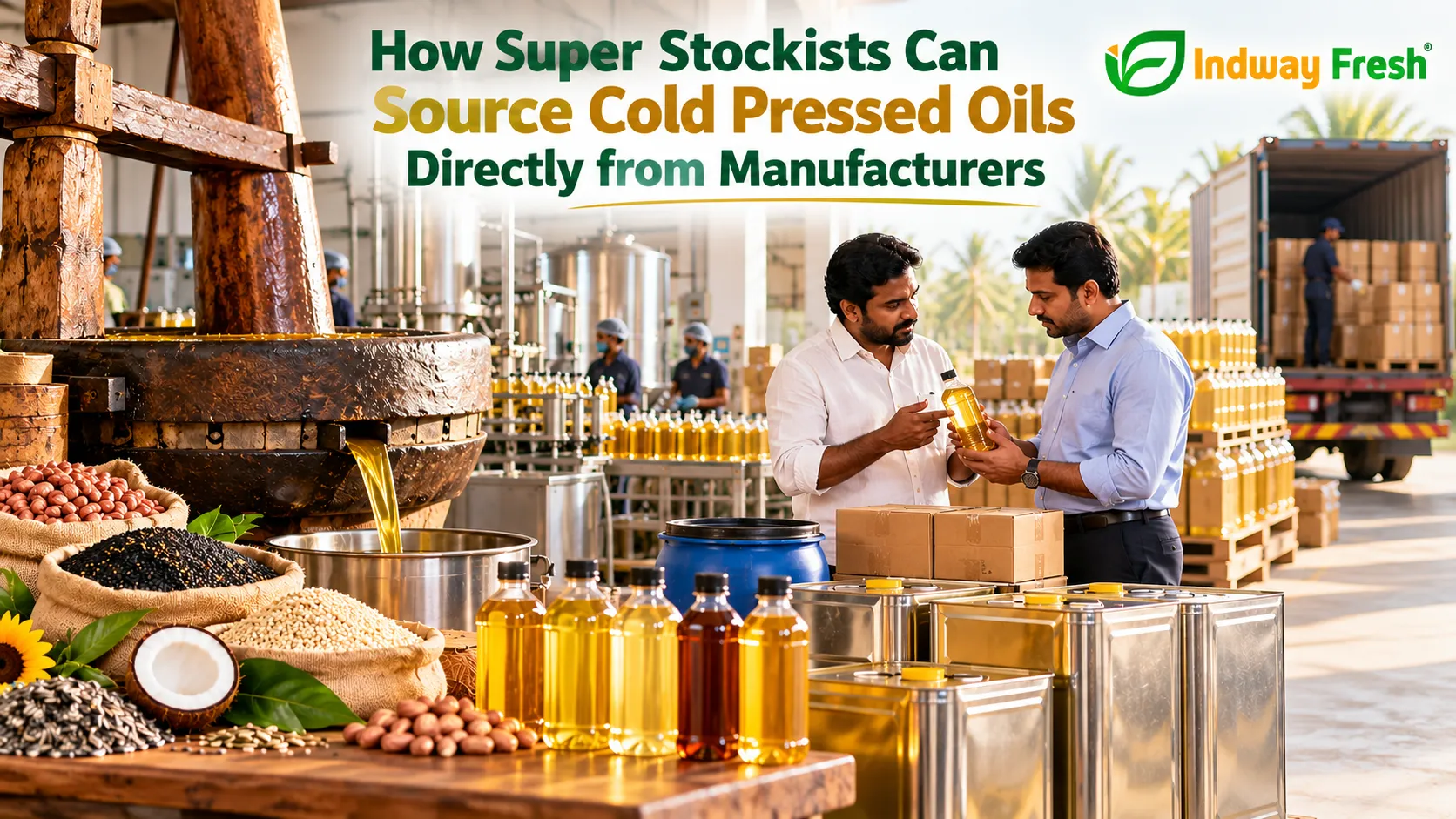
Demand for cold pressed oils (Kachi Ghani, Chekku and Kolhu extracted) keeps growing across Indian households, modern trade, and HoReCa. For a super stockist, this is a chance to build a high-margin, differentiated portfolio. But the margin depends on one decision: who you buy from.
Buying through layers of traders, agents, and re-packers erodes your margin, weakens quality control, and makes consistent supply hard to guarantee. Sourcing directly from a cold press manufacturer fixes most of these problems. This guide covers how to do it step by step.
Why Super Stockists Are Moving to Direct Manufacturer Sourcing
1. Better margins. Every middleman between the mill and your warehouse adds a markup. Going direct means you buy at factory-gate pricing and keep the spread.
2. Quality you can trace. Cold pressed oil is sold on trust: low-temperature extraction, no chemical solvents, no refining. Buying from the source lets you verify the process, the seed origin, and the batch records yourself.
3. Stable supply. Direct manufacturer relationships mean committed production slots and fewer stock-outs, especially during seasonal oilseed price swings.
4. Pricing and scheme control. You negotiate volume slabs, payment terms, and distributor schemes yourself, instead of accepting whatever a trader passes down.
5. Private label and exclusivity options. Many manufacturers offer white-label or exclusive territory arrangements to stockists who can commit volume.
Step 1: Define What You Need Before You Approach Anyone
Manufacturers respond faster to buyers who know their requirements. Prepare:
- Product range: groundnut, sesame (gingelly), coconut, mustard, sunflower, castor, or a mixed portfolio
- Pack sizes: 200 ml to 15 L tins and pouches, depending on your channel (retail, kirana, HoReCa, institutional)
- Monthly volume estimate and growth projection
- Territory: the districts or states you serve
- Branding model: the manufacturer’s brand, your private label, or both
Step 2: Shortlist Manufacturers and Verify Their Credentials
Not every unit that says “cold pressed” is one. Before you spend time on samples, verify:
| Check | What to look for |
|---|---|
| FSSAI license | Valid manufacturing license (not just a trading or registration certificate). Verify the number on the FSSAI portal. |
| Extraction method | Genuine wooden or stone ghani / low-RPM expeller, with extraction temperature kept low |
| Quality systems | HACCP, ISO, or GMP practices; documented hygiene and traceability |
| Lab testing | In-house QC plus third-party reports from NABL-accredited labs (acid value, peroxide value, moisture, adulteration tests) |
| Raw material sourcing | Seed origin, supplier relationships, storage conditions |
| Capacity | Daily and monthly output, and whether it can handle your volume without compromising quality |
| Packaging | Food-grade tins, PET, or glass; batch coding; shelf-life labelling |
Step 3: Request Samples and Test Them Independently
Ask for samples of each SKU you plan to stock and evaluate them on:
- Aroma and taste: true cold pressed oils have a distinct, natural seed aroma
- Colour and clarity: natural variation is normal; be wary of unnaturally clear, bland oil
- Lab results: send samples to an independent NABL lab, and don’t rely only on the manufacturer’s report
- Shelf life: ask for the manufacturer’s stability data and check storage recommendations
Also request batch-wise COAs (Certificates of Analysis) as a standing condition of supply.
Step 4: Understand the Commercial Terms
Clarify these before you place a first order:
- MOQ (Minimum Order Quantity): per SKU and per dispatch
- Pricing structure: ex-factory vs delivered, GST treatment, and volume-slab discounts
- Payment terms: advance, partial advance, or credit period, and how these change as the relationship matures
- Lead time: production plus dispatch, and buffer for peak seasons
- Territory exclusivity: whether you get it, and what minimum performance it requires
- Returns and damage policy: leakage, transit damage, near-expiry stock
- Marketing support: POS material, product training, launch support, sampling
Step 5: Put Quality and Supply in Writing
A handshake is not enough for a long-term supply relationship. Your agreement should cover:
- Product specifications and quality parameters
- Batch testing and COA obligations
- Packaging and labelling compliance (FSSAI labelling norms)
- Supply commitments and delay remedies
- Pricing review mechanism (oilseed prices move; agree how and when prices are revised)
- Territory, duration, and termination terms
- Confidentiality, especially for private label formulations and artwork
Step 6: Plan Logistics and Warehousing
Cold-pressed oils are sensitive to heat, light, and long storage. Set up:
- Cool, dry, shaded storage away from direct sunlight
- FIFO stock rotation with batch tracking
- Sturdy packaging and careful handling to prevent leakage
- Reliable transport partners for secondary distribution to retailers and institutions
Step 7: Start Small, Track, and Scale
Begin with a pilot order across two or three best-selling SKUs. Track:
- Sell-through rate and repeat orders at retail level
- Customer feedback on taste, packaging, and price
- Defect or leakage rate
- Manufacturer’s on-time delivery and communication
Once the numbers hold, expand your SKU range and territory.
Common Mistakes Super Stockists Should Avoid
- Choosing on price alone. The cheapest “cold pressed” oil is often not cold pressed.
- Skipping licence checks. An invalid FSSAI licence is your liability too.
- Relying only on manufacturer-provided lab reports.
- Ignoring seasonality. Oilseed price swings affect supply and pricing.
- Overstocking. Cold pressed oils have a shorter shelf life than refined oils.
- No written agreement. Verbal terms rarely survive a price spike.
FAQs
What is a super stockist in the FMCG and edible oil business?
A super stockist is a high-volume distributor who buys in bulk from the manufacturer and supplies a network of distributors or sub-stockists within a defined territory.
Can a super stockist buy cold-pressed oil directly from the manufacturer?
Yes. Many cold press manufacturers actively work with super stockists and distributors, often offering volume-based pricing and territory arrangements.
What documents should I ask a cold-pressed oil manufacturer for?
A valid FSSAI manufacturing license, GST registration, batch-wise lab reports, packaging and labelling compliance details, and any quality certifications such as HACCP or ISO.
What is a typical MOQ for bulk cold-pressed oil?
It varies by manufacturer, pack size, and branding model. [INSERT manufacturer’s actual MOQ]
Can I get a private label cold-pressed oil as a stockist?
Many manufacturers offer private labelling. Terms, MOQs, and artwork requirements differ, so confirm these early.
How do I check whether an oil is genuinely cold-pressed?
Ask about the extraction process, request a plant visit, check temperature controls and press type, and get independent lab testing.
