

-
Vinoth
- Posted on
- Categories:General
- 0 comments
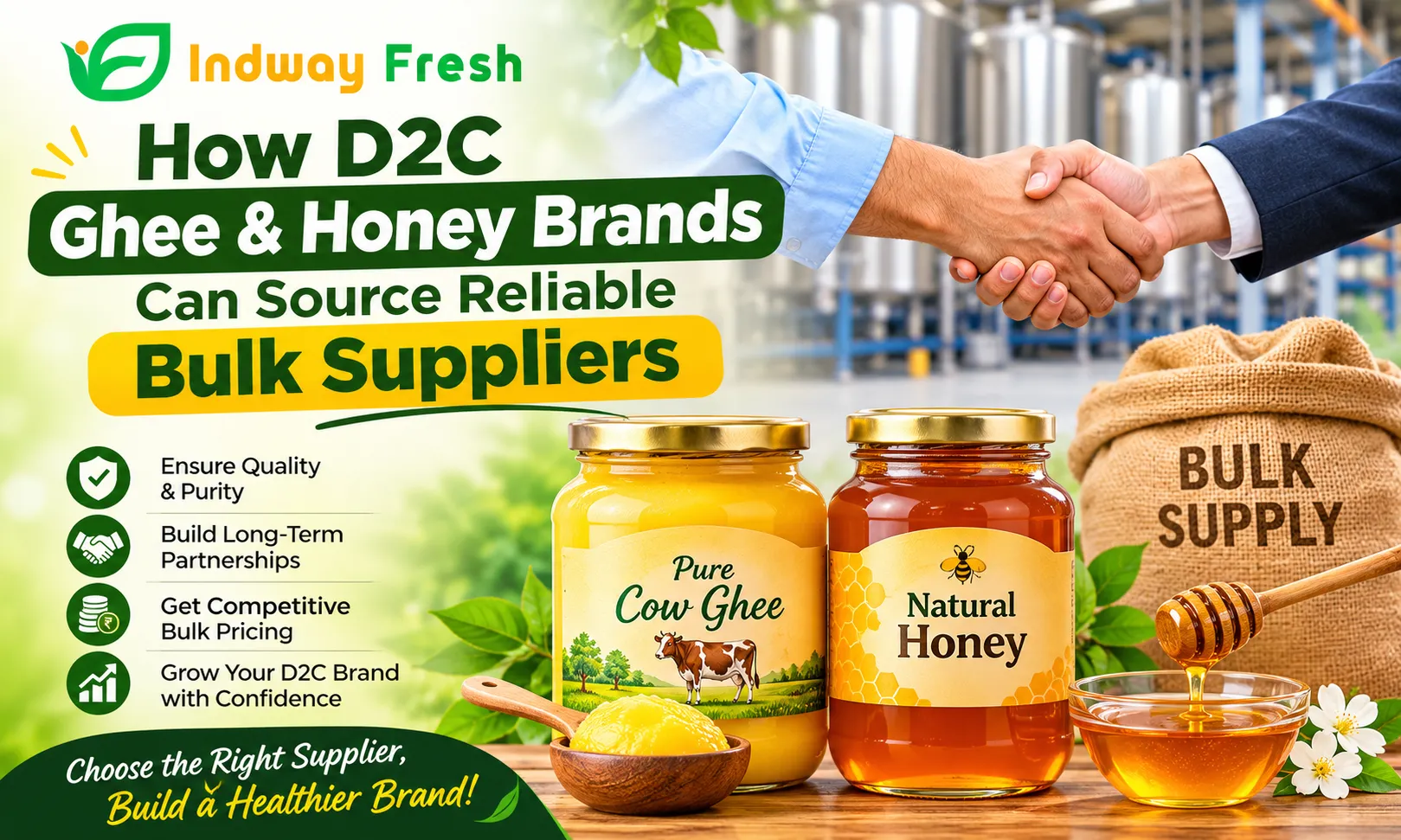
Ghee and honey look like easy categories to start a D2C brand in. Both are pantry staples, both carry a “pure” and “traditional” story, and Indian consumers already buy them in large volumes. The hard part is supply. Both products are widely adulterated, and in both, the quality you promise on your label depends entirely on the supplier behind it.
One bad batch can undo months of marketing: a ghee jar that smells off, or a honey that crystallizes strangely and gets flagged in a review. This guide walks through how to find, vet, and keep bulk suppliers you can trust.
Why Sourcing Is the Make-or-Break Decision in Ghee and Honey
In most D2C categories, you can differentiate through packaging, pricing, or marketing. In ghee and honey, your supplier is your product. You are building a brand on someone else’s raw material, so your reputation is only as strong as their consistency.
Both categories also have well-known purity problems:
- Honey: sugar syrup blending, heat processing that destroys natural properties, and unclear floral or regional origin.
- Ghee: vegetable fat or cheaper animal fat blending, inconsistent moisture content, and vague claims around “A2,” “bilona,” or “desi cow” that are hard to verify.
Because these claims are hard for customers to check, regulators, marketplaces, and journalists check them for you. Your sourcing process has to hold up to that scrutiny.
Step 1: Define Your Product Spec Before You Talk to Suppliers
Suppliers will happily quote on a vague brief and give you whatever is easiest for them to supply. Write your specification first:
- Ghee: milk source (cow, buffalo, or A2 cow), method (traditional bilona/curd-churned or direct cream), aroma and grain texture, shelf-life target, and packaging format (bulk tins, drums, or pre-filled jars).
- Honey: floral source (multifloral, wild forest, acacia, jamun, and so on), raw versus processed, moisture level, origin region, and whether you need export-grade testing.
- For both: target price band, monthly volume, and batch-to-batch consistency expectations.
A clear spec filters out most unsuitable suppliers within the first conversation.
Step 2: Know the Types of Suppliers
| Supplier Type | Best For | Watch Out For |
|---|---|---|
| Dairies and cooperatives (ghee) | Consistent volume, established processes | Higher MOQ, less flexibility on custom specs |
| Small-batch/bilona producers | Premium and heritage positioning | Limited capacity, batch variation |
| Beekeeper groups and FPOs (honey) | Traceable origin, wild or forest stories | Seasonal supply, inconsistent moisture |
| Honey processors and packers | Large volume, standardized output | Over-processing, unclear sourcing upstream |
| Contract manufacturers / private label units | Brands that want sourcing, processing, and filling in one place | Dependence on one partner, less visibility into raw material |
| Traders and aggregators | Quick fill-in supply | Weak traceability, higher adulteration risk |
Most healthy D2C brands end up with one primary supplier and one qualified backup.
Step 3: Verify Credentials, Not Just Claims
Ask for documents up front and check them yourself:
- FSSAI license: confirm the license number is valid for the correct category and premises, and that it is current.
- Quality systems: HACCP, ISO 22000, or GMP/GHP certification where the supplier claims them.
- Lab reports: recent third-party tests from an NABL-accredited lab covering the parameters relevant to your product (purity, moisture, and adulterant screening).
- Export credentials: APEDA registration and export test records, if relevant to your plans.
- Traceability records: where the milk or nectar came from and how batches are tracked.
Treat a supplier’s reluctance to share documents as a data point in itself.
Step 4 : Test Samples Properly
A single sample from the supplier’s best batch tells you very little. Instead:
- Request samples from multiple batches, ideally drawn at different times.
- Send them to your own independent lab, not only the supplier’s.
- Run sensory checks with a small panel: aroma, taste, texture, and aftertaste.
- Store a retained sample from every approved batch for future comparison.
For honey, also observe how it behaves over time, such as crystallization patterns, since this affects how customers perceive quality.
Step 5 : Audit the Facility (or Have Someone Do It)
If possible, visit. If not, commission a third-party audit. Look at:
- Hygiene, storage conditions, and temperature control
- How raw material is received, tested, and segregated
- Whether the facility handles other products that could cause blending or contamination
- How batches are labeled and traced
A facility visit often reveals more than any certificate.
Step 6: Negotiate Terms That Protect Your Brand
Price matters, but these terms matter more for a D2C brand:
- MOQ and scaling: start with a manageable minimum, with agreed pricing as volumes grow.
- Quality clauses: define acceptable specs, testing rights, and what happens when a batch fails.
- Payment terms: avoid paying fully upfront with new suppliers.
- Exclusivity and confidentiality: especially if you are developing a signature product.
- Lead times and buffer stock: honey is seasonal, and ghee quality can vary with milk cycles, so plan inventory accordingly.
Build Redundancy and Monitor Continuously
Even a great supplier can have a bad season. Protect yourself by:
- Qualifying a second supplier early, even if you only buy small volumes from them
- Testing every incoming lot, not just the first
- Tracking complaint trends against batch numbers
- Reviewing the relationship quarterly on quality, delivery, and responsiveness
Red Flags to Walk Away From
- Prices far below market average
- No willingness to share lab reports or visit the facility
- Unclear or changing answers about raw material origin
- Reluctance to sign a quality agreement
- Claims (A2, bilona, wild, raw) with no supporting documentation
Frequently Asked Questions
What is a reasonable MOQ for a new D2C ghee or honey brand?
It varies widely by supplier type. Small-batch producers often accept lower quantities, while large dairies and processors set higher minimums. Ask suppliers about pilot or trial orders before committing to full MOQ. [Insert typical MOQ range for your sourcing region after verification.]
Should I source directly or use a private label manufacturer?
Direct sourcing gives more control and margin but requires stronger quality-management capabilities. Private label manufacturing is faster to launch but offers less visibility into raw materials. Many brands start with private label and move toward direct sourcing as they scale.
How often should I test incoming batches?
Test every lot, at least for core purity and moisture parameters, and run a fuller panel periodically. Keep retained samples for each batch.
How do I verify a supplier’s FSSAI license?
Check the license number against the official FSSAI records and confirm that the license category and premises match what the supplier actually does.
Can I use one supplier for both ghee and honey?
Rarely. The two categories need very different expertise and infrastructure, so most brands use specialist suppliers for each.
Final Takeaway
Reliable sourcing is not a one-time purchase decision. It is an ongoing system of specs, verification, testing, and relationship management. D2C ghee and honey brands that treat supplier selection as a core brand-building activity, not a procurement chore, are the ones that earn repeat customers and survive scrutiny.
