

-
Vinoth
- Posted on
- Categories:General
- 0 comments
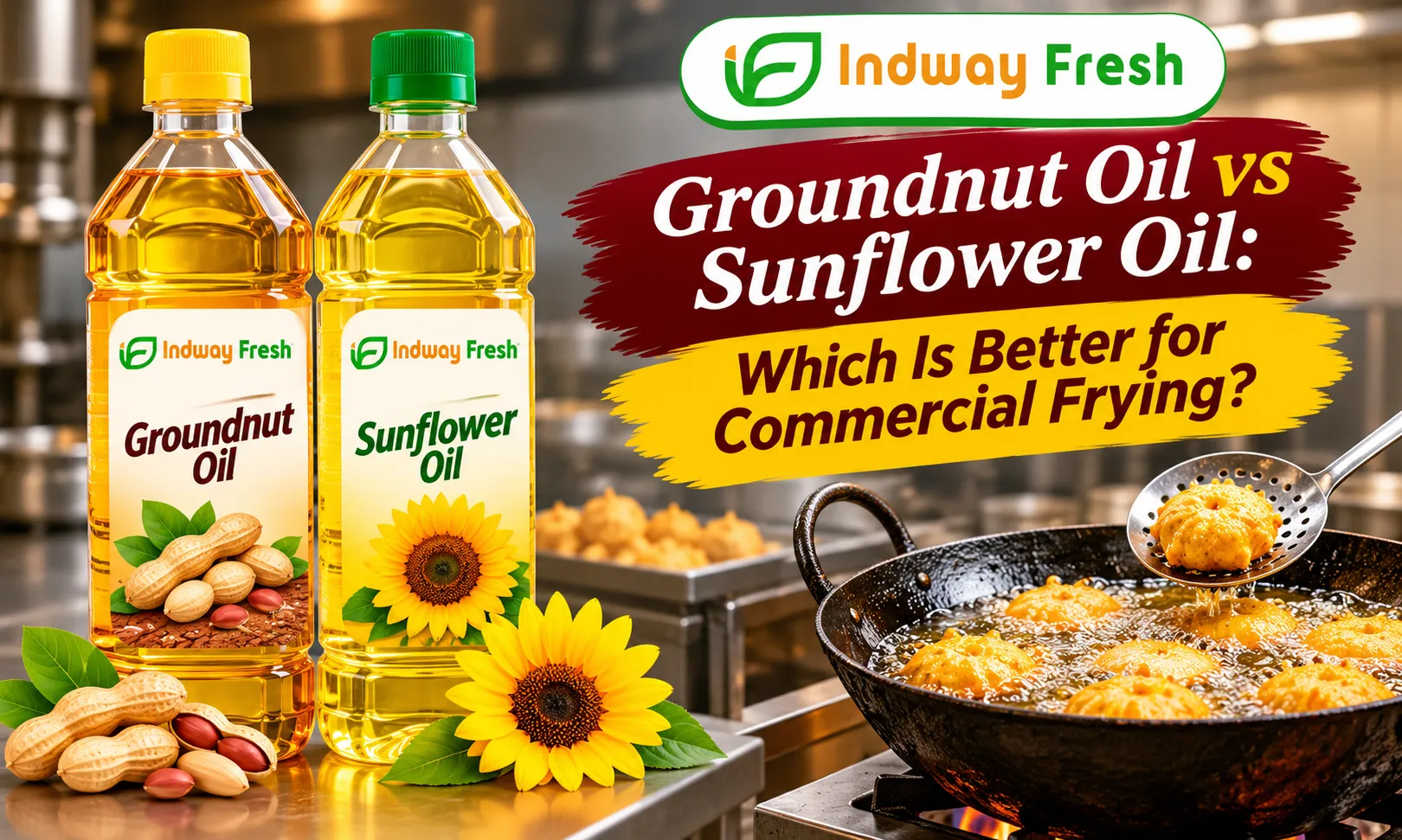
Choosing a frying oil is one of the biggest recurring cost decisions for a restaurant, caterer, snack manufacturer, or sweet shop. The wrong oil raises your cost per batch, shortens oil life, and changes the taste your customers expect. Groundnut oil and sunflower oil are the two most common choices in Indian commercial kitchens, and each wins in different situations. This guide compares them on the factors procurement teams care about, so you can decide with confidence.
Quick Answer
For deep frying where taste, aroma, and frying stability matter, such as vadai, bajji, murukku, poori, and fried chicken, groundnut oil is usually the better choice. For high-volume frying where the lowest cost per litre is the main priority, refined sunflower oil is often the more economical option. Many bulk buyers use both, depending on the product being fried.
-
Smoke Point and Heat Stability
Deep frying typically runs between 160°C and 190°C, so the oil must stay stable at those temperatures.
Groundnut oil has a high smoke point, roughly 220–230°C in refined form, and holds up well under repeated heating. Its fatty acid profile is rich in monounsaturated fats, which resist oxidation better than polyunsaturated fats.
Sunflower oil (standard, high-linoleic) also has a high smoke point in refined form, but it is rich in polyunsaturated linoleic acid. This makes it more prone to oxidation and breakdown during long or repeated frying. High-oleic sunflower oil performs much better, but it is a different and usually costlier grade, so confirm which grade your supplier is quoting.
Verdict: Groundnut oil offers better stability for repeated frying. High-oleic sunflower oil closes the gap, standard sunflower oil does not.
-
Taste, Aroma, and Food Quality
Groundnut oil gives fried food a mild nutty flavour and a clean, crisp finish. This is why it is traditional for South Indian snacks, sweets, and street food. Cold pressed groundnut oil retains more of its natural aroma, which many customers associate with authentic home-style cooking.
Sunflower oil is neutral in taste and aroma. That is an advantage when you want the flavour of the food or spices to stand out, and it suits bakery items, fried rice accompaniments, and mixed menus.
Verdict: Choose groundnut oil when flavour is part of your product. Choose sunflower oil when you need a neutral base.
-
Frying Life and Oil Turnover
Oil that lasts more fry cycles lowers your effective cost, even if the purchase price is higher. Because groundnut oil is more stable, it generally tolerates more fry cycles before darkening, foaming, or developing off-smells, provided you filter regularly and control temperature. Standard sunflower oil tends to degrade faster under continuous high-heat use.
Frying life depends heavily on practice: temperature control, filtering food particles, avoiding water contamination, and topping up with fresh oil. Whichever oil you choose, track your total polar compounds (TPC) or use frying oil test strips to decide when to discard.
-
Cost per Litre vs Cost per Batch
Sunflower oil is generally priced lower per litre than groundnut oil, especially in refined form, and prices move with seed harvests and import conditions. Groundnut oil, particularly cold pressed, usually carries a premium.
The right comparison is cost per batch, not cost per litre. If groundnut oil gives you more fry cycles and a product customers prefer, the premium may pay for itself. If you run a very high-volume, low-margin operation with fast oil turnover, sunflower oil can be the better fit. Ask suppliers for current quotes and calculate both ways.
-
Nutrition and Fatty Acid Profile
Groundnut oil is high in monounsaturated fats and contains vitamin E. Sunflower oil is also a good source of vitamin E and is high in polyunsaturated fats. Neither oil contains cholesterol. For customers who prefer traditional, minimally processed oils, cold pressed (chekku or wood-pressed) groundnut oil has strong appeal. Always rely on the lab analysis report for exact fatty acid values for your supplied batch, rather than generic figures.
-
Cold Pressed vs Refined for Frying
Cold pressed oils retain natural flavour and nutrients but generally have a lower smoke point and more natural sediment than refined oils. For shallow frying, tempering, and moderate-temperature frying, cold pressed groundnut oil works very well. For continuous deep frying at high temperature, many commercial kitchens choose refined oil or blend cold pressed oil with a more heat-stable one. Discuss your frying temperature and volume with your supplier so they can recommend the right grade.
- Which Businesses Should Choose Which?
Choose groundnut oil if you are:
- A South Indian restaurant or catering business frying vadai, bajji, bonda, or murukku
- A sweet shop or snack manufacturer positioning products as traditional or premium
- A HoReCa operator who wants consistent flavour and stable frying
- A private-label brand targeting health-conscious or heritage-oriented buyers
Choose sunflower oil if you are:
- A high-volume fryer where cost per liter is the deciding factor
- A bakery or QSR needing a neutral-flavor oil
- A business with very fast oil turnover where frying life matters less
Consider using both if your menu mixes flavor-led items and neutral items.
-
What to Check Before Placing a Bulk Order
- FSSAI license and batch-wise Certificate of Analysis (COA)
- Free fatty acid (FFA) and peroxide value limits
- Moisture and sediment levels
- Packaging options: HDPE drums, jerry cans, IBC totes, or tins
- MOQ, ex-factory price, delivery terms, and lead time
- Private-label packaging availability, if required
- Export documentation for overseas buyers: Certificate of Origin, Phytosanitary Certificate, and COA
Why Buyers Source from Indway Fresh
Indway Fresh supplies cold-pressed groundnut oil and other natural food ingredients to restaurants, caterers, distributors, food manufacturers, and export buyers. With 8 years of serving customers, we support bulk orders with consistent quality, batch-wise documentation, flexible packaging, and private-label options.
