

-
Vinoth
- Posted on
- Categories:General
- 0 comments
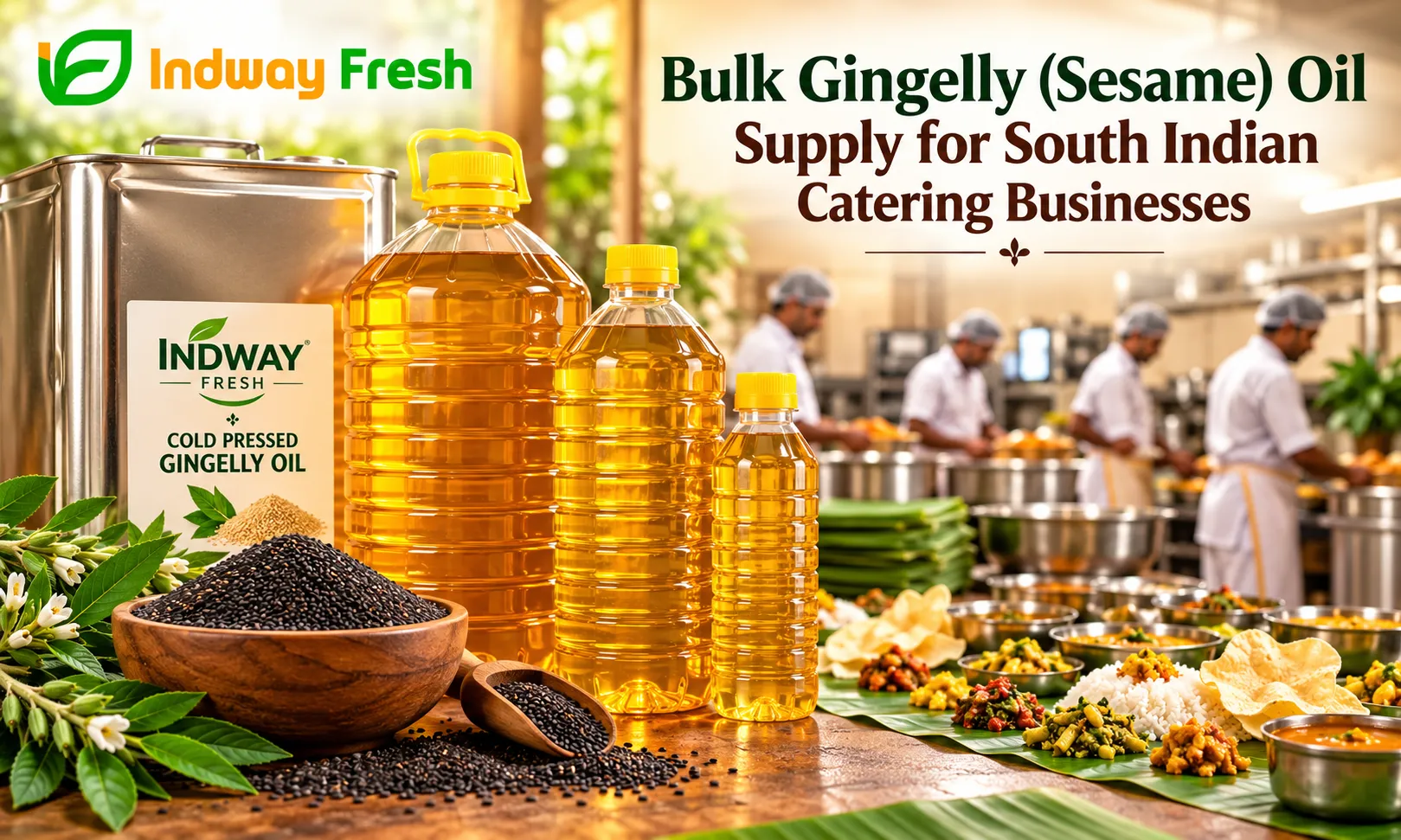
For a South Indian caterer, gingelly oil is not a “premium extra.” It sits in the kitchen next to the ghee and the tamarind. Podi and idli milagai podi, kuzhambu, pickles, temple prasadam and festival sweets all depend on its aroma. Buying it in bulk is where a catering business either protects its margins and flavour consistency or loses both.
This guide covers what caterers, mess operators, banquet kitchens and temple-event suppliers should look for in a bulk gingelly oil supplier.
Why Catering Businesses Buy Gingelly Oil in Bulk
- Cost control: Retail packs (200 ml to 1 L) cost far more per litre than 15 L tins, 20 L jars or drum supply.
- Consistent taste across batches: Every event tastes the same when the oil comes from the same source and process every time.
- Uninterrupted supply in peak seasons: Muhurtham months, Pongal, Diwali, Navaratri and temple festivals can spike demand overnight.
- Predictable pricing: Standing monthly or quarterly orders let you lock rates and avoid spot-market jumps.
Types of Gingelly Oil: Which One Suits Which Kitchen?
| Type | Process | Aroma and Taste | Best Used For |
|---|---|---|---|
| Cold-pressed (Kachi Ghani / Chekku / Marachekku) | Pressed slowly at low temperature, unrefined | Mild, nutty, fresh | Pickles, podi mixing, kuzhambu, tempering, salads, health-focused menus |
| Roasted-seed sesame oil (dark) | Seeds roasted before pressing | Strong, deep, toasty | Specific regional dishes, finishing oil |
| Refined sesame oil | Solvent or high-heat extraction, then refined | Neutral, light | Deep frying where cost matters more than aroma |
Where Bulk Gingelly Oil Is Used in South Indian Catering
- Idli podi, milagai podi, and gunpowder mixes
- Pickles (mango, lime, garlic, gongura)
- Kuzhambu, sambar, and rasam tempering
- Sweets such as ellu urundai and til chikki
- Temple prasadam, lamp lighting, and ritual cooking
- Health-oriented thali and “traditional menu” catering
What to Check Before Choosing a Bulk Supplier
1. Seed Quality and Sourcing
Ask where the sesame comes from, how it is cleaned and how it is stored. Good oil begins with clean, sorted, moisture-controlled seed.
2. Extraction Method
Confirm whether the oil is genuinely cold-pressed (wooden or stainless-steel ghani) or only labelled that way. Ask to see the pressing unit or a short video of it.
3. Certifications and Compliance
- FSSAI licence (valid and displayed on the invoice)
- HACCP / ISO certification, if the supplier claims it
- Batch-wise lab test reports (NABL-accredited lab) for purity, FFA and peroxide value
4. Packaging Options
| Pack | Typical Use |
|---|---|
| 1 L / 5 L | Trials, small kitchens |
| 15 L tin | Mid-size caterers, mess kitchens |
| 20 L / 50 L HDPE or SS drum | Banquet and central kitchens |
| 200 L drum | Large institutional and wholesale buyers |
Food-grade, tamper-evident packing matters. It protects the oil during transport.
5. Minimum Order Quantity (MOQ) and Pricing
Many suppliers set an MOQ. Clarify it, along with:
- Price per litre by pack size
- GST treatment
- Freight and delivery charges
- Payment terms for repeat customers
6. Delivery Reliability
Ask about dispatch time, delivery coverage (Madurai, Chennai, Coimbatore, Trichy, Bengaluru and others) and what happens during festival-season rushes.
7. Samples Before Commitment
A serious supplier will send a sample. Test it in your own recipes (a podi batch and a kuzhambu tempering are good tests) before placing a large order.
Storage Tips for Caterers
- Store in a cool, dry place away from direct sunlight and heat sources.
- Keep containers tightly closed to slow oxidation.
- Use clean, dry ladles. Moisture shortens shelf life.
- Follow first-in, first-out (FIFO) on bulk stock.
- Gingelly oil has a naturally long shelf life, but follow the best-before date on the pack.
Why Cold-Pressed Gingelly Oil Works Better for Catering Brands
- Retains natural aroma, which customers notice in podis and pickles
- Free from chemical solvents and refining agents
- Carries the “traditional, healthy” positioning that many catering clients now want
- Easier to explain on menus and in marketing: “prepared in cold-pressed gingelly oil”
Frequently Asked Questions
1. What is the difference between gingelly oil and sesame oil?
In Tamil Nadu, “gingelly oil” (nallennai) is the common name for sesame oil. The cold-pressed version is light amber and mild, while roasted-seed sesame oil is darker with a stronger toasty smell.
2. Can I use cold-pressed gingelly oil for deep frying?
It suits tempering, shallow cooking and traditional dishes best. For high-volume deep frying, many caterers use a refined oil, or blend, to manage cost and smoke point.
3. What is the minimum order for bulk supply?
It varies by supplier and pack size. Many start from a few 15 L tins. Confirm the MOQ and the rate slab in writing.
4. Do you provide lab test reports and FSSAI details?
A reliable supplier shares the FSSAI licence number and, on request, batch-wise test reports.
5. Can I get private label or custom packing?
Many suppliers offer private-label packing for caterers and retailers, usually with a higher MOQ.
6. How do I check if gingelly oil is pure?
Do not rely on home tests. Ask for a lab report and buy from a supplier with traceable batch records.
7. Do you deliver outside Madurai?
Delivery coverage depends on the supplier. Confirm the routes, transit time, and freight terms before ordering.
Call to Action
Planning a wedding season, temple festival, or regular catering contract? Request a sample and a bulk rate quote for cold-pressed gingelly oil, and compare it against what you use today.
