

-
Vinoth
- Posted on
- Categories:General
- 0 comments
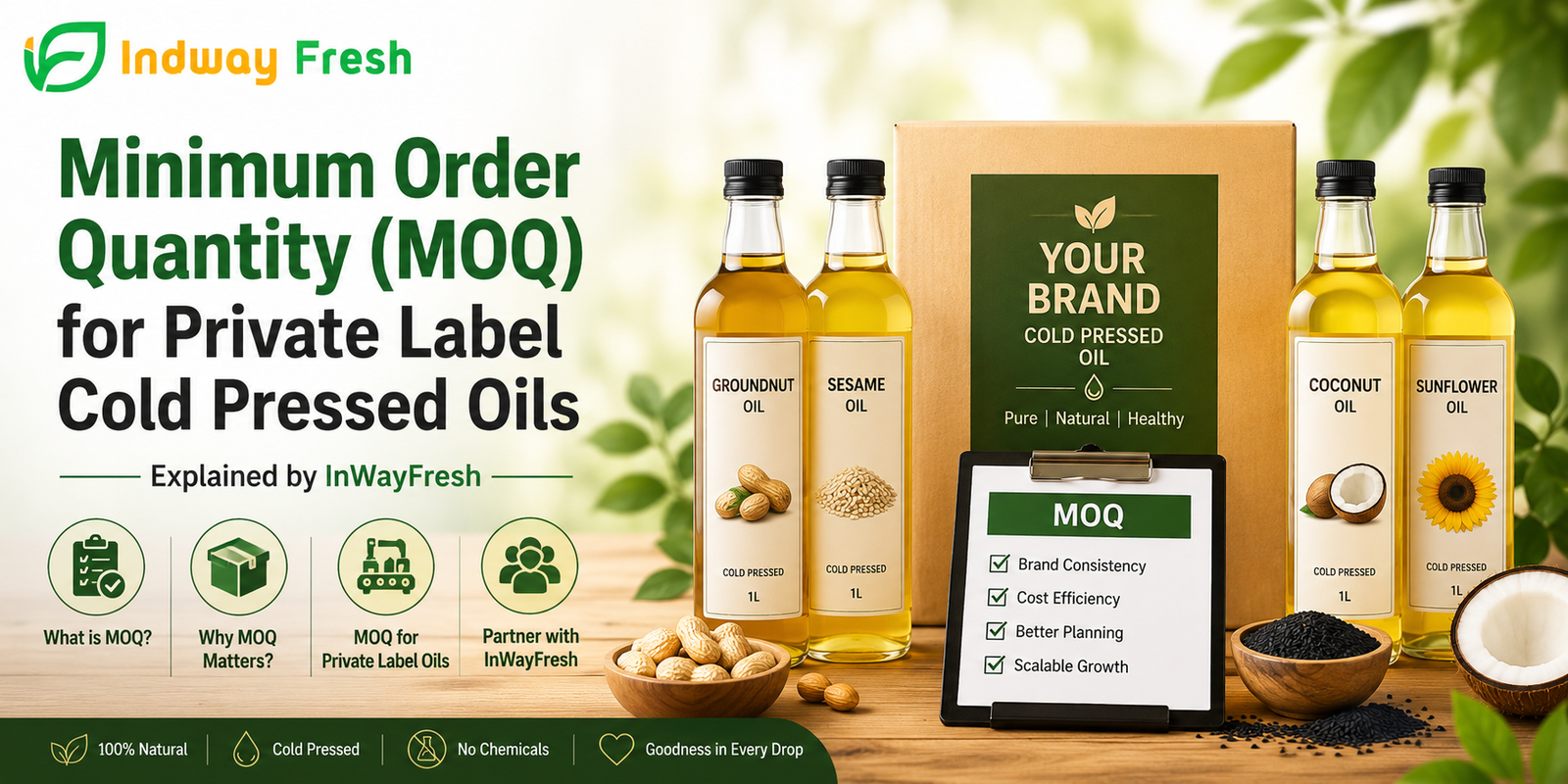
If you’re planning to launch your own brand of cold pressed oils groundnut, coconut, sesame, mustard, or any other variety one of the first questions you’ll run into is: “What’s the MOQ?”
At InWayFresh, we get this question from almost every new brand owner we work with. Here’s a clear breakdown of what MOQ means, why it exists, and how to plan around it.
What is MOQ?
MOQ, or Minimum Order Quantity, is the smallest quantity of product a manufacturer or supplier is willing to produce and sell in a single order. For private label cold pressed oils, this is usually expressed in litres, kilograms, or number of bottles/units.
For example, a manufacturer might say:
- Minimum 500 litres per SKU (flavour/variant)
- Minimum 1,000 bottles of 1L each
- Minimum 200 kg of raw seed processed per batch
Why Does MOQ Exist for Cold Pressed Oils?
Cold pressing is a batch process, not a continuous one like refined oil production. A few factors drive MOQ requirements:
- Machine batch capacity Cold press (ghani/expeller) machines run most efficiently at a certain load size. Running a machine for a very small quantity isn’t cost-effective.
- Raw material procurement Suppliers buy seeds/nuts in bulk (sacks, tonnes). Very small orders don’t align well with raw material lot sizes.
- Packaging costs Custom private label bottles, caps, and labels usually have their own MOQs from packaging vendors, which manufacturers factor in.
- Labour and cleaning cycles Machines need to be cleaned and reset between different oil types, so smaller runs increase per-unit cost.
- Quality consistency Larger batches allow better filtration, settling, and quality control before bottling.
Typical MOQ Ranges in India
While it varies by manufacturer, here’s a general sense of what to expect:
| Scale of ManufacturerTypical MOQ | |
|---|---|
| Small-batch / boutique cold press units | 50–200 litres |
| Mid-size contract manufacturers | 300–1,000 litres |
| Large-scale private label manufacturers | 1,000+ litres |
Some manufacturers (like boutique or startup-friendly ones) offer lower MOQs to help new brands test the market before committing to large volumes.
Factors That Can Affect MOQ
- Type of oil (groundnut and sesame often have lower MOQs than niche oils like almond or flaxseed)
- Packaging complexity (custom bottle shapes, printed labels, tamper seals increase MOQ)
- Number of SKUs/variants ordered at once
- Whether it’s a trial order or a repeat/contract order
- Season and raw material availability
Tips for New Private Label Brands
- Start with 1–2 SKUs instead of launching your full range at once this keeps your initial MOQ commitment lower.
- Ask for a trial/sample batch before committing to full MOQ, so you can test taste, packaging, and shelf life.
- Negotiate flexible MOQs with manufacturers who work with new/emerging brands.
- Plan your packaging MOQ separately sometimes the bottle/label MOQ is the real bottleneck, not the oil itself.
- Forecast demand realistically so you’re not stuck with excess unsold inventory.
How InWayFresh Helps
InWayFresh works with private label brands to make entering the cold pressed oil business simpler helping you understand realistic MOQs, plan your first order, and scale up as your brand grows, without the guesswork.
Have questions about starting your own private label cold pressed oil brand? Reach out to WayFresh to discuss your MOQ, packaging, and launch plan. tamil menaing
