

-
Vinoth
- Posted on
- Categories:General
- 0 comments
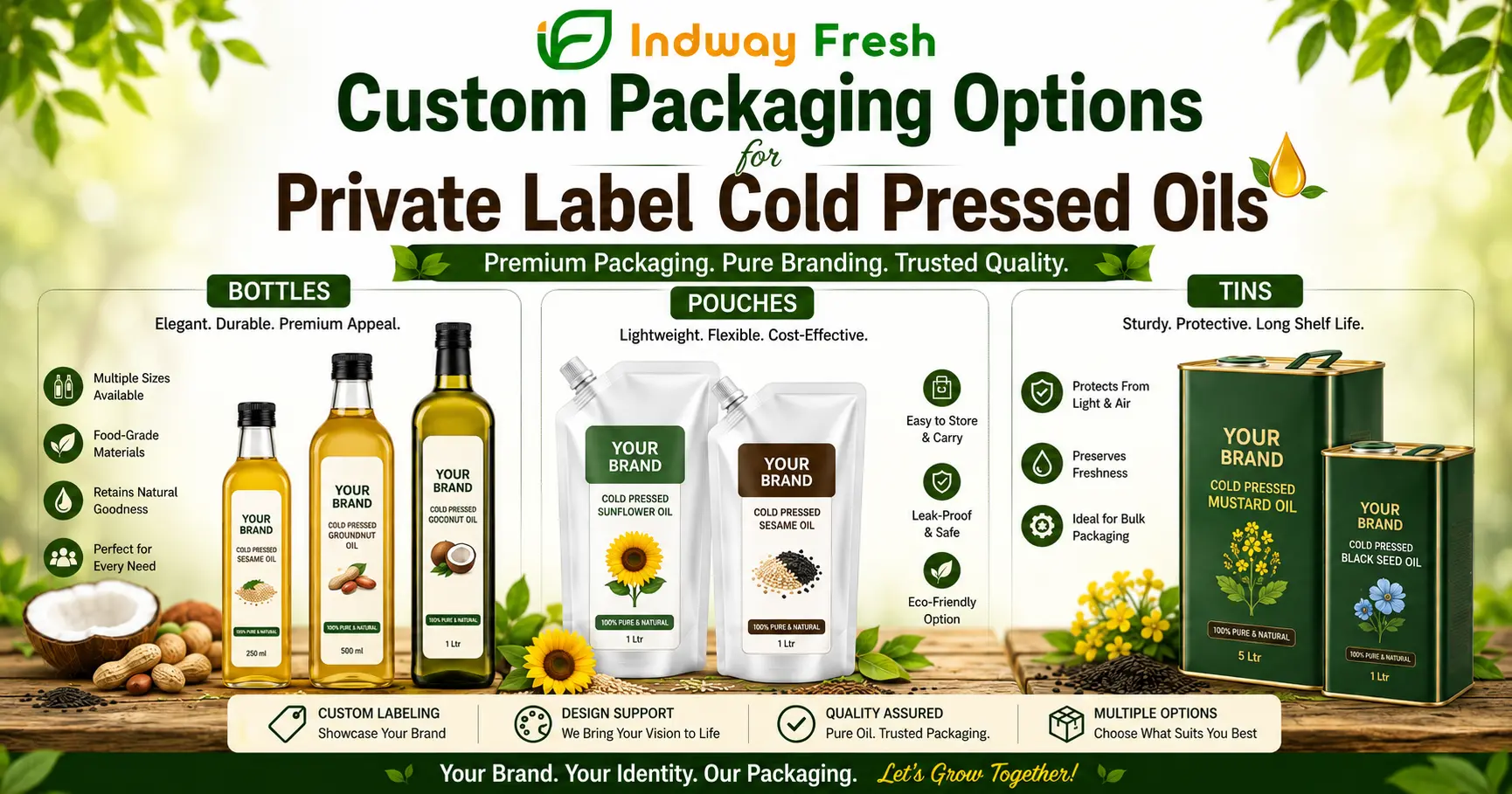
Cold pressed oils have moved from niche health-store shelves to mainstream kitchens, and with that shift, packaging has become just as important as the oil itself. For brands like InwayFresh building a private label line, the right packaging doesn’t just hold the product it protects the oil’s purity, extends shelf life, and communicates quality the moment a customer picks it up. Here’s a practical look at the three most common packaging formats and how to choose between them.
Why Packaging Matters for Cold Pressed Oils
Cold pressed oils are extracted without heat or chemical solvents, which preserves natural nutrients, flavor, and aroma but it also makes them more sensitive to light, air, and temperature than refined oils. Poor packaging can lead to rancidity, oxidation, and loss of the very qualities that justify a premium price. That’s why private label brands need to think about packaging as part of the product formulation, not an afterthought.
1. Bottles: The Classic, Trusted Format
Bottles remain the most popular choice for cold pressed oils, especially for retail and gifting.
Material options:
- Glass bottles Amber or dark green glass blocks UV light and is the gold standard for preserving oil quality. Glass also feels premium and is fully recyclable, which appeals to eco-conscious buyers.
- PET plastic bottles Lighter, shatterproof, and more affordable for shipping in bulk. UV-protective PET or opaque bottles help offset the lack of natural light blocking that glass provides.
- Aluminum bottles Excellent light and oxygen barrier, lightweight, and increasingly used for premium or export-focused private labels.
Customization options:
- Bottle shapes (round, square, Boston, Bordeaux-style)
- Cap types: pourer spouts, tamper-evident caps, dropper caps for smaller therapeutic-use oils
- Custom labels, embossing, or screen printing for brand identity
- Sizes ranging from 100ml sample bottles to 5-liter bulk containers
Bottles work best for brands prioritizing shelf presence and a premium unboxing experience.
2. Pouches: Lightweight and Cost-Efficient
Stand-up pouches and spouted pouches have gained popularity, particularly for D2C and e-commerce-first brands.
Advantages:
- Significantly lighter than glass or metal, reducing shipping costs
- Flexible multi-layer barrier films can match or exceed the oxygen and light protection of some rigid packaging
- Space-efficient for storage and transport more units fit per shipment
- Resealable spouts and zip-locks improve usability for refill packs
Customization options:
- Matte or gloss laminate finishes
- Die-cut shapes and windows to show product color
- Spout position and size for controlled pouring
- Full-color digital printing for vibrant private label branding
Pouches are a strong fit for value packs, refill formats, or brands targeting younger, sustainability-minded consumers who want less packaging waste.
3. Tins: Premium and Traditional Appeal
Metal tins, especially for oils like sesame, mustard, or coconut, carry strong cultural and heritage associations in many markets, particularly across South Asia and the Middle East.
Advantages:
- Excellent barrier against light and air, keeping oil fresher for longer
- Sturdy and tamper-resistant, ideal for export and long-distance distribution
- Reusable by customers, which adds perceived value
- Distinct shelf presence that stands apart from bottles and pouches
Customization options:
- Lithographed (printed directly on metal) or label-wrapped designs
- Round, square, or rectangular tin shapes
- Easy-open lids, pour spouts, or screw-cap inserts
- Sizes from 200ml gift tins to 15-liter bulk catering tins
Tins work particularly well for brands leaning into tradition, authenticity, or bulk/institutional sales.
Choosing the Right Format for Your Private Label
| FactorBottlesPouchesTins | |||
|---|---|---|---|
| Light/Oxygen protection | High (glass/amber) | Medium-High (barrier film) | Very High |
| Shipping cost | Higher (glass) / Medium (PET) | Low | Medium-High |
| Shelf appeal | Premium, classic | Modern, casual | Traditional, sturdy |
| Sustainability | High (glass, recyclable) | Medium (depends on film) | High (reusable metal) |
| Best for | Retail, gifting | D2C, refills, value packs | Export, bulk, heritage branding |
Final Thoughts
There’s no single “best” packaging for cold pressed oils the right choice depends on target market, price positioning, shipping distance, and brand story. Many private label brands, including those positioning themselves the way InwayFresh does, use a mixed strategy: glass bottles for flagship retail SKUs, pouches for value or refill lines, and tins for bulk or export markets. Testing small batches across formats before committing to large production runs is the safest way to find what resonates with your specific customer base while keeping the oil as fresh as the day it was pressed. tamil meaning
