

-
Vinoth
- Posted on
- Categories:General
- 0 comments
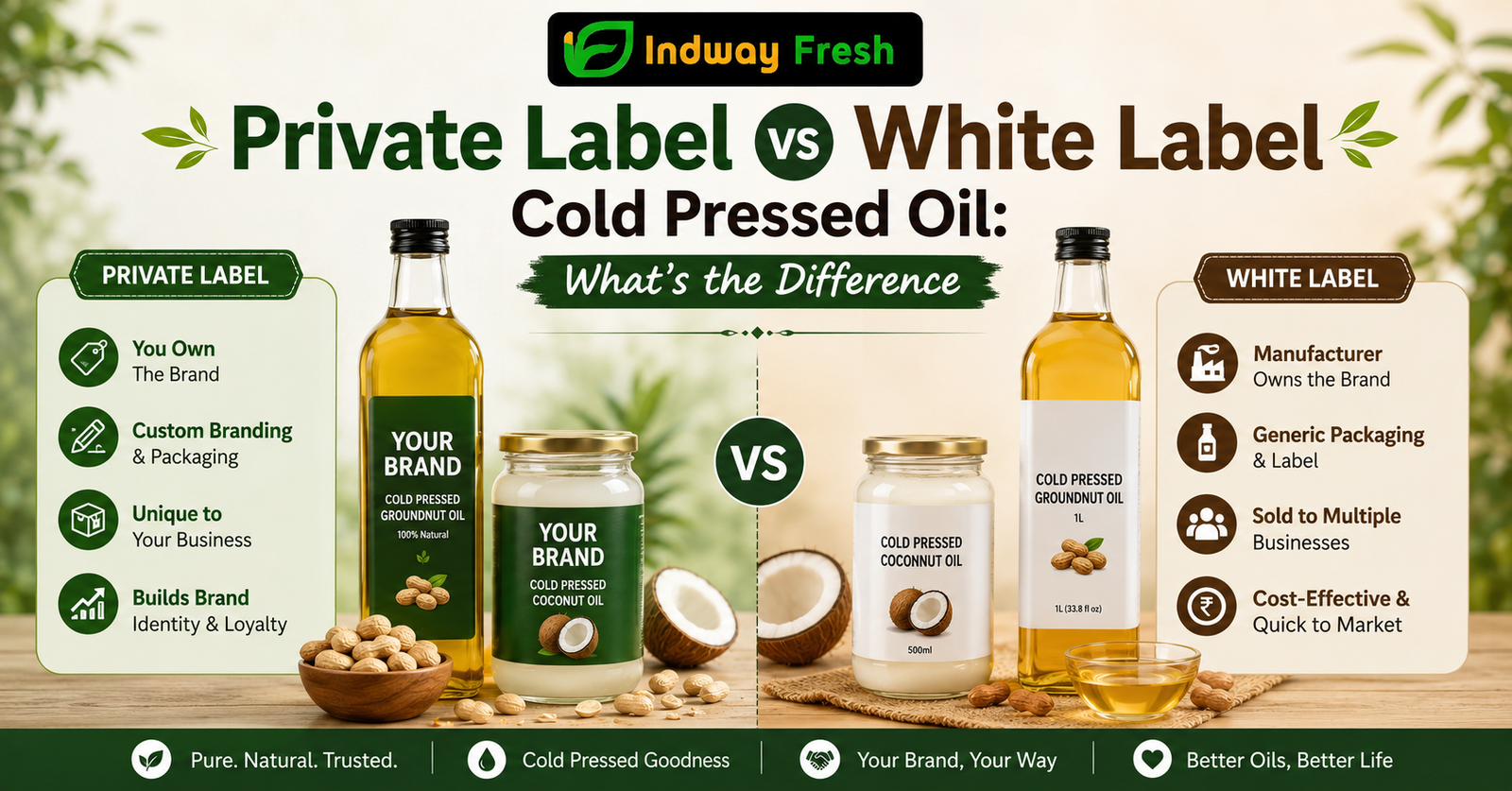
If you’re planning to launch your own cold pressed oil brand, you’ve probably come across two terms that get used and confused a lot: private label and white label. While they sound similar and are often used interchangeably, they represent very different business models. Understanding this difference can save you time, money, and a lot of confusion when you’re sourcing cold pressed oils for your brand.
At InWayFresh, we work with businesses at every stage of this journey, so let’s break down exactly what sets these two models apart.
What Is White Label Cold Pressed Oil?
White label means the product is manufactured as a standard, ready-made formula that multiple brands can put their label on. The oil whether it’s coconut, groundnut, sesame, mustard, or any other cold pressed variety is produced in bulk using the same recipe, quality, and process for every buyer.
Think of it like buying the same product off a shelf and simply changing the packaging and branding. Multiple companies could be selling the exact same oil under different brand names.
Key features of white label cold pressed oil:
- Same base product sold to multiple brands
- Faster turnaround since there’s no custom formulation
- Lower minimum order quantities (MOQs) in most cases
- Lower cost, since manufacturing is shared across clients
- Limited ability to customize the extraction process, blend, or specifications
This model works well for businesses that want to enter the market quickly without investing heavily in product development.
What Is Private Label Cold Pressed Oil?
Private label, on the other hand, means the product is manufactured specifically for your brand, based on your own specifications. You have a say in things like the raw material source, extraction method, oil blend ratios, packaging design, and sometimes even the entire production process.
Essentially, you’re not just slapping your logo on an existing product you’re creating a formula and process that’s exclusively yours (or close to it), even if the manufacturer produces it for you.
Key features of private label cold pressed oil:
- Customized formulation based on your brand’s requirements
- Greater control over quality parameters and ingredients
- Exclusive or near-exclusive product line for your brand
- Higher MOQs and slightly longer lead times
- More opportunity to build a distinct brand identity in the market
This model suits businesses that want to build a long-term, differentiated brand rather than just resell a generic product.
Private Label vs White Label: Quick Comparison
| FactorWhite LabelPrivate Label | ||
|---|---|---|
| Product formula | Same for all buyers | Customized for your brand |
| Manufacturing control | Minimal | High |
| Cost | Lower | Higher |
| MOQ | Lower | Higher |
| Turnaround time | Faster | Longer |
| Brand differentiation | Limited | Strong |
| Best for | Quick market entry, testing demand | Long-term brand building |
Which One Should You Choose?
The right choice really depends on your business goals:
- Choose white label if you’re just starting out, want to test the market with minimal investment, or need to launch quickly without worrying about formulation details.
- Choose private label if you’re serious about building a distinct brand identity, want control over quality and sourcing, and are ready to invest in a product that’s truly your own.
Many businesses actually start with white label to test demand and gradually move to private label as their brand grows and they better understand what their customers want.
How InWayFresh Can Help
Whether you’re looking to launch a quick white label cold pressed oil line or want a fully customized private label product, InWayFresh works with brands to deliver authentic, high-quality cold pressed oils tailored to your business needs — from sourcing and extraction to packaging and delivery.
Get in touch with our team to discuss which model fits your business best, and let’s build something great together. tamil meaning
Continue using AI Cursor?Keep it onTurn Off
