

-
Vinoth
- Posted on
- Categories:General
- 0 comments
Introduction
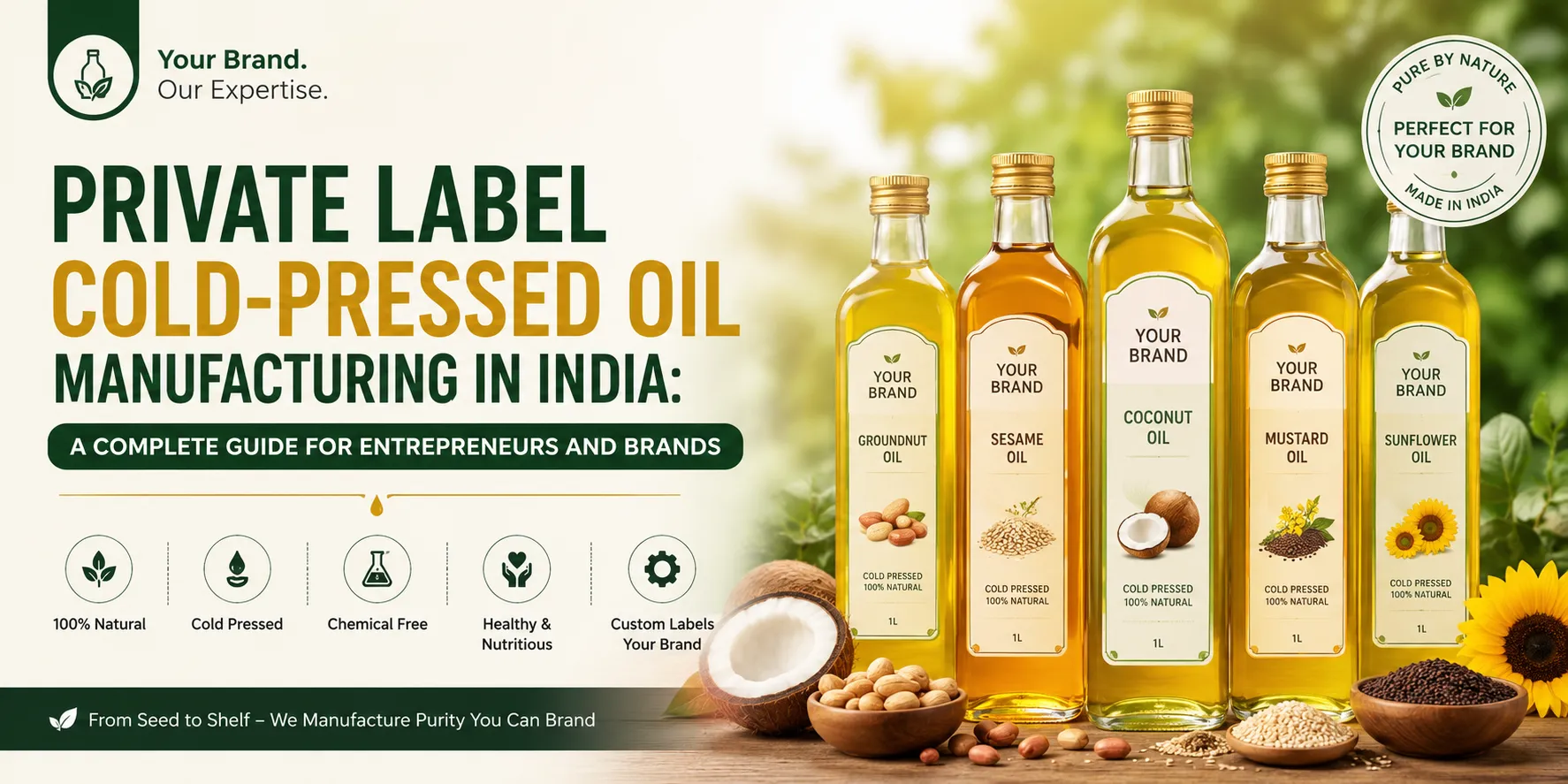
Walk into any health food store or premium grocery chain in India today, and you will notice something striking: shelves lined with artisanal cold-pressed oils, each bottle bearing a unique brand name. This is the power of private label manufacturing at work. From coconut oil to groundnut, sesame to sunflower, cold-pressed oils have carved out a high-value niche in India’s ₹1.5 lakh crore edible oil market—and the private label route has become the smartest entry point for entrepreneurs, exporters, and wellness brands alike.
This blog explores everything you need to know about private label cold-pressed oil manufacturing in India: what it means, how it works, the key players and regions, regulatory requirements, and why now is the perfect time to launch your own brand.
What Is Cold-Pressed Oil—And Why Does It Matter?
Cold pressing is one of the oldest methods of oil extraction known to mankind. In this process, seeds and nuts are mechanically pressed at temperatures below 49°C (120°F) without chemical solvents or excessive heat. The result is an oil that retains its natural flavor, aroma, color, and most importantly, its full nutritional profile.
Compare this to the conventional refining process, which uses hexane (a petrochemical solvent) and high-temperature treatments to maximize oil yield. While refined oils are cheaper to produce and have a longer shelf life, they lose a significant portion of their naturally occurring antioxidants, vitamins like vitamin E, and essential fatty acids in the process.
Cold-pressed oils, often labeled as virgin, wood-pressed, chekku oil, or ghani oil, command a premium price and a loyal consumer base. They are especially popular among health-conscious consumers, fitness enthusiasts, diabetics, and families seeking a return to traditional Indian cooking methods.
The Private Label Model: What It Is and How It Works
Private labeling means you source a product manufactured by a third-party facility, package it under your own brand name, and sell it to consumers. In the cold-pressed oil segment, this model has gained tremendous momentum over the last five years.
Step 1 – Product Selection
You decide which oil or oil blend you want to sell—be it cold-pressed coconut oil, sesame oil, groundnut oil, mustard oil, black seed oil, or specialty blends.
Step 2 – Manufacturer Identification
You partner with an FSSAI-licensed cold-pressed oil manufacturing unit that has the capacity, quality certifications, and experience to produce to your specifications.
Step 3 – Customization
You specify your bottle size, label design, ingredient sourcing preferences, such as organic or single-origin, and packaging material.
Step 4 – Production and Quality Testing
The manufacturer produces the oil, conducts quality checks, including acid value, peroxide value, moisture content, and free fatty acids, and packages it under your brand.
Step 5 – Distribution
You handle the sales through Amazon, Flipkart, your own D2C website, retail outlets, wholesale networks, or export channels.
The beauty of this model is that it significantly lowers the barrier to entry. You do not need to invest crores in machinery, land, or raw material procurement. Your capital goes entirely into branding, marketing, and distribution, where the real value is created.
Why India Is Ideally Positioned for Cold-Pressed Oil Manufacturing
Rich Agricultural Diversity
India grows an extraordinary range of oilseed crops. Rajasthan and Gujarat dominate groundnut and mustard production. Kerala and Tamil Nadu are known for coconut oil. Sesame is widely cultivated across Andhra Pradesh, Telangana, and Gujarat.
Traditional Processing Heritage
India has a deep-rooted tradition of cold pressing through wooden churners called chekku in South India and ghani in North India. This heritage gives Indian cold-pressed oils a unique authenticity.
Cost-Competitive Manufacturing
Labor and land costs remain competitive, enabling manufacturers to produce premium-quality cold-pressed oils at attractive price points for both domestic and export markets.
Growing Domestic Demand
India’s health and wellness food market continues to grow rapidly. Cold-pressed oils benefit from increasing awareness about healthy lifestyles and traditional foods.
Export Potential
Indian cold-pressed oils, especially organic virgin coconut oil and sesame oil, are gaining strong traction in the USA, Europe, UAE, Singapore, and Australia.
Key Manufacturing Hubs in India
Tamil Nadu (Coimbatore, Salem, Tirunelveli, Madurai)
Tamil Nadu is one of India’s leading cold-pressed oil manufacturing regions. Hundreds of units produce sesame, coconut, and groundnut oils using modernized chekku extraction systems.
Kerala (Thrissur, Palakkad, Kochi)
Kerala is renowned for virgin coconut oil production and supports numerous private label manufacturers serving domestic and export markets.
Gujarat (Rajkot, Junagadh, Gondal)
Gujarat’s vast groundnut cultivation supports a thriving cold-pressed groundnut oil industry.
Rajasthan (Jaipur, Jodhpur, Bikaner)
Rajasthan is widely recognized for cold-pressed mustard oil production and organic oil manufacturing.
Andhra Pradesh and Telangana
These states are known for premium sesame cultivation and high-quality cold-pressed sesame oil manufacturing.
Top Private Label Cold-Pressed Oil Brands to Benchmark
Standard Cold-Pressed Oil (Madurai, Tamil Nadu)
One of Tamil Nadu’s trusted cold-pressed oil brands offering oils, ghee, honey, millets, and natural products with pan-India delivery.
Key Highlights
- 37,000+ satisfied customers
- 300+ natural products
- FSSAI-certified and lab-tested
- Free shipping above ₹1000
- Cash on Delivery available
- Pan-India delivery
- WhatsApp ordering support
Branches
- Madurai
- Chennai
- Bengaluru
- Hyderabad
Standard Store (Tamil Nadu)
India’s leading sesame oil brand with a strong market presence in both sesame and groundnut oil categories.
Indwayfresh (Bulk Orders)
Specializes in single-press and wood-pressed oils, including coconut, groundnut, sesame, mustard, almond, flaxseed, and castor oils.
Regulatory Requirements for Private Label Cold-Pressed Oils
FSSAI License
Your manufacturing partner and brand entity must comply with FSSAI licensing requirements.
Labelling Standards
Labels must include product name, nutritional information, FSSAI license number, net quantity, manufacturer details, and expiry information.
Organic Certification
Organic claims require NPOP, USDA Organic, or EU Organic certifications, depending on the target market.
BIS Standards
Premium brands increasingly align with BIS quality standards for enhanced credibility.
Export Documentation
Exporters require IEC registration, phytosanitary certificates, and destination-country compliance documentation.
What to Look for in a Manufacturing Partner
- Valid FSSAI License
- In-house quality testing facilities
- Documented cold extraction process
- Raw material traceability
- ISO 22000 or FSSC 22000 certification
- Flexible MOQ options
- Custom packaging support
- Proven private label experience
Trends Shaping the Market in 2025 and Beyond
Single-Origin and Heritage Variety Oils
Consumers increasingly prefer oils with traceable origins and traditional heritage stories.
Subscription-Based D2C Models
Monthly subscription plans help brands generate recurring revenue and improve customer retention.
Functional and Blended Oils
Herbal-infused oils with ingredients like moringa, curry leaf, and ashwagandha are creating new premium product categories.
WhatsApp Commerce
WhatsApp-based ordering combined with fast delivery and cash-on-delivery options is driving strong growth, particularly in Tier-2 and Tier-3 cities.
Conclusion
Private label cold-pressed oil manufacturing in India presents a compelling opportunity for entrepreneurs, investors, and food brands. With strong consumer demand, established manufacturing infrastructure, and growing export opportunities, the market is primed for growth.
Success depends on choosing the right manufacturing partner, building an authentic brand story, maintaining consistent quality, and creating a strong multi-channel distribution strategy. The opportunity is here—now is the perfect time to launch your cold-pressed oil brand.
